Vinyl herringbone flooring: how to choose and lay it
Click vinyl herringbone gives you the charm of a classic parquet with the simplicity of vinyl. Here is everything you need to know before you order and lay your floor.
Herringbone or chevron: what is the difference?
The two are often confused. The difference is at the ends of the planks:
| Pattern | Plank shape | Look |
|---|---|---|
| Herringbone | Rectangular planks, square ends | The planks meet at right angles in a staggered zigzag: a warm, classic look |
| Chevron | Ends cut at an angle (45° or 60°) | The planks meet in a point along one line: continuous arrows, a more graphic look |


Our 60 × 12.5 cm vinyl planks are herringbone planks.
Why choose vinyl herringbone?
- Water-resistant: the rigid SPC core does not swell, so the floor also suits kitchens and bathrooms (with a vapour barrier in damp rooms).
- Integrated acoustic underlay: 1 mm of IXPE already bonded to every plank, cutting impact sound by 19 dB. No need to add another.
- No glue, no sanding: the planks click together as a floating floor, and you can walk on it as soon as it is laid.
- Hard-wearing: 0.55 mm wear layer, class 23 / 33, for intensive domestic and commercial use.
- Only 5 mm thick: handy in renovations, for example over existing tiles.
- A varied look: 14 different plank designs, deep wood texture and a bevel on all 4 sides.
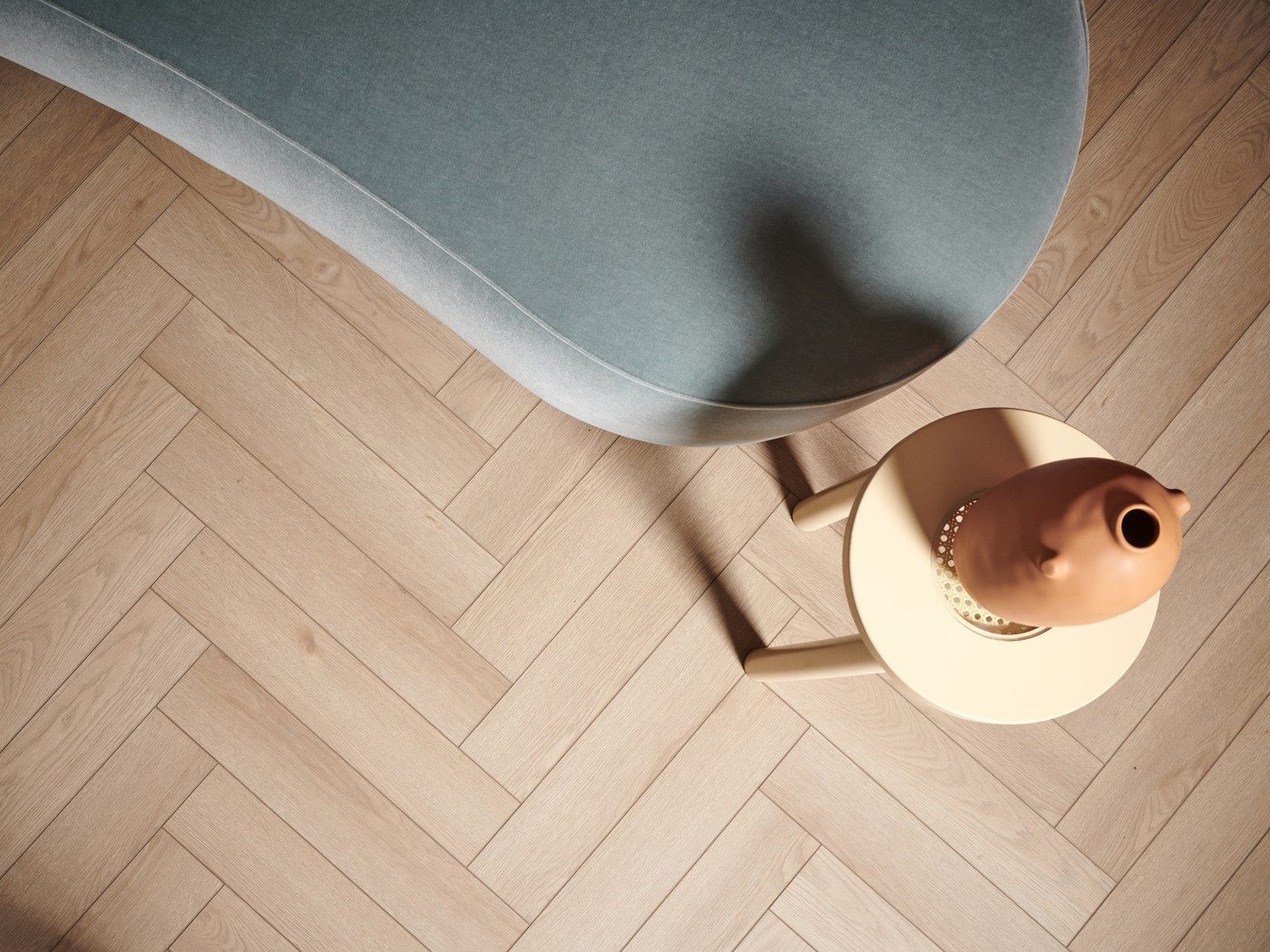
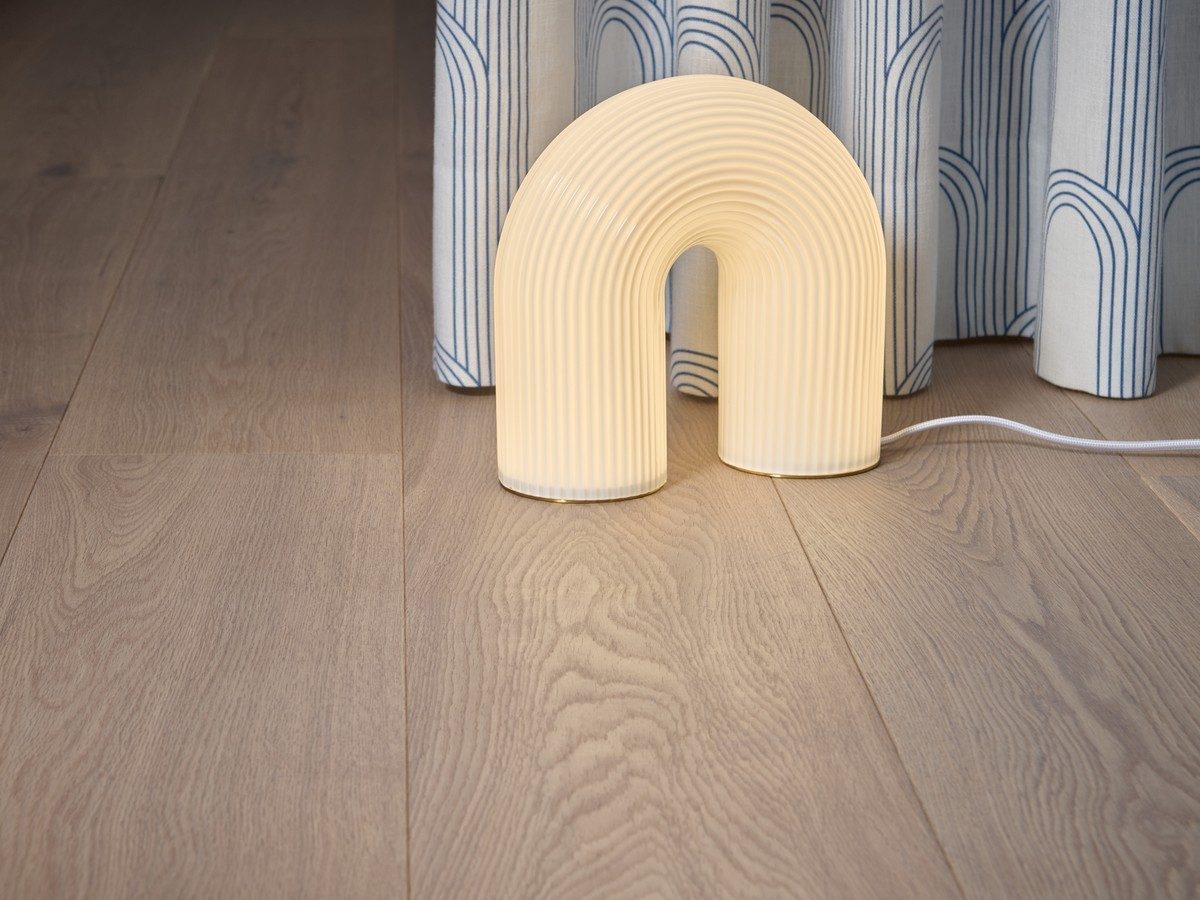
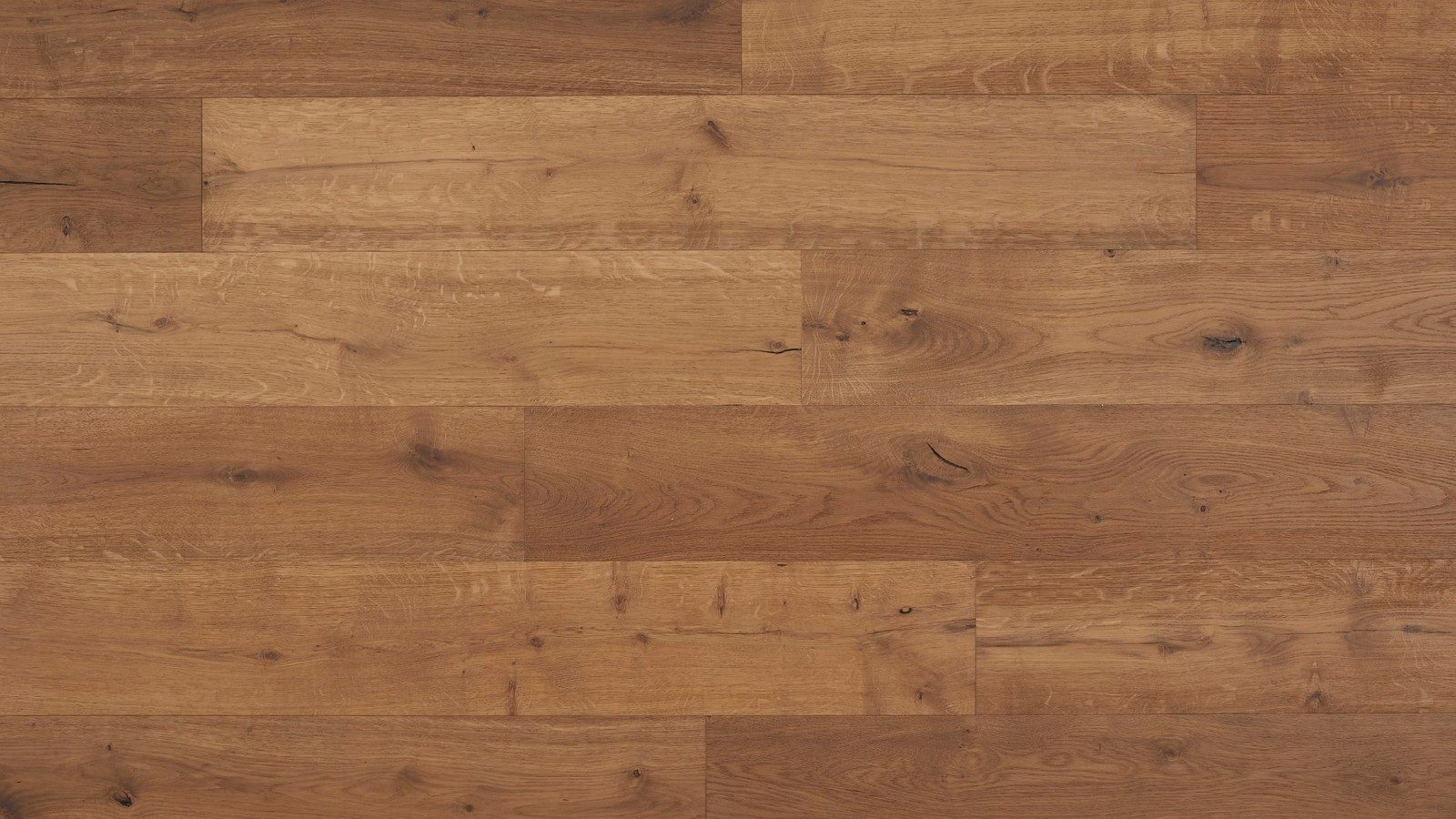
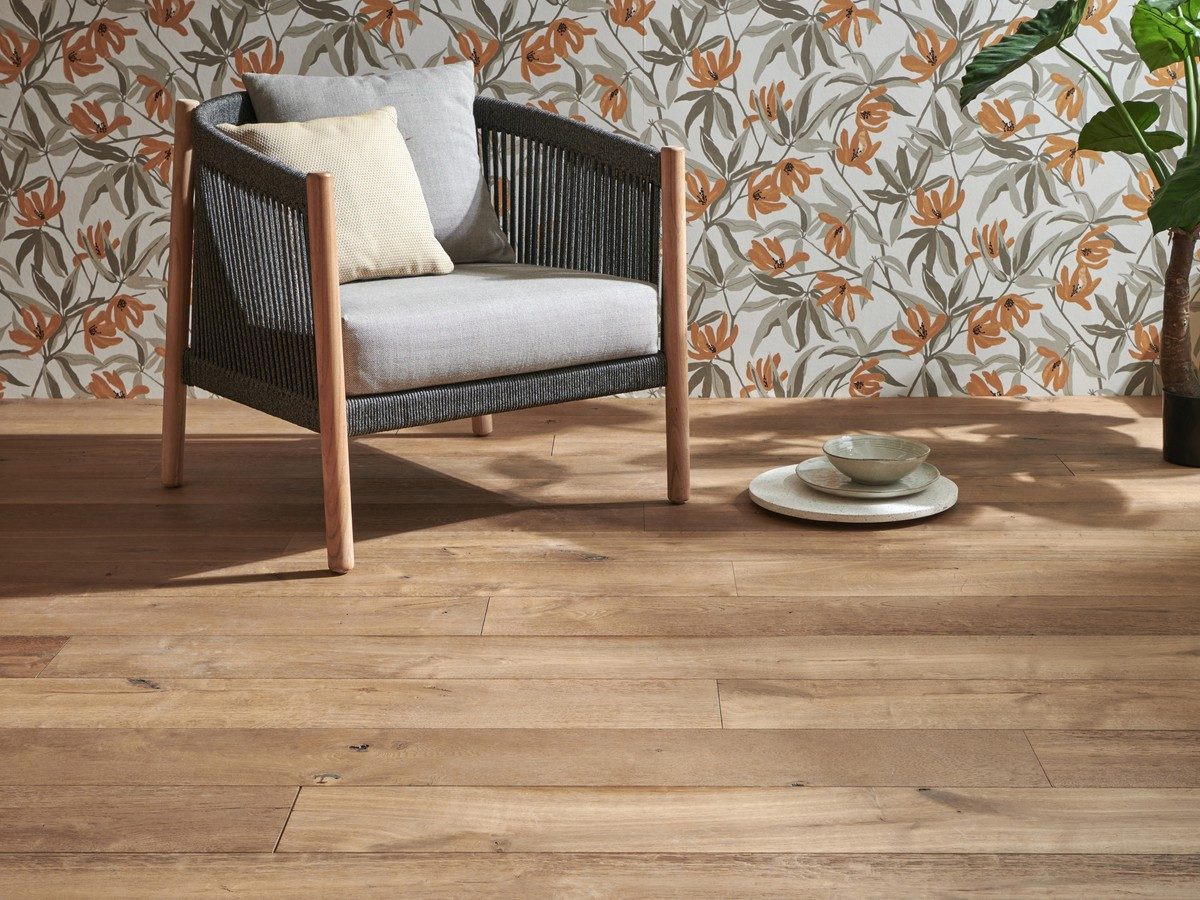
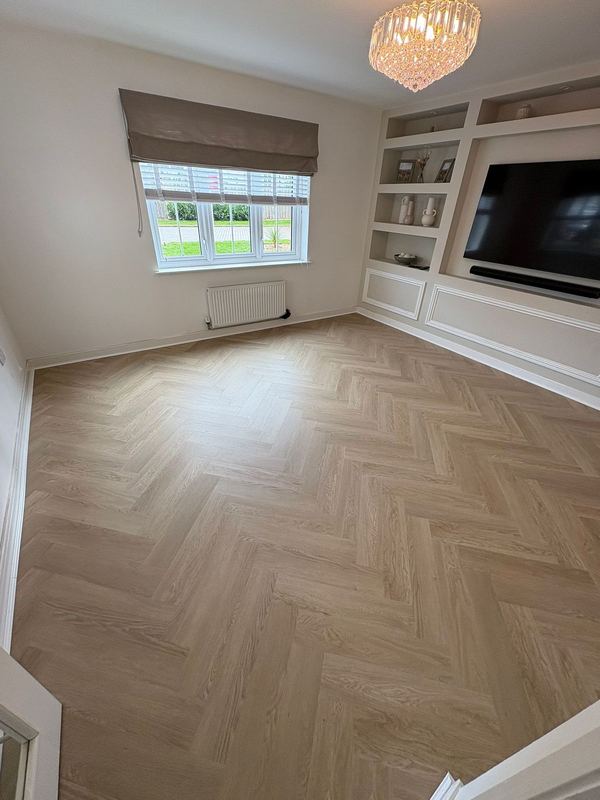
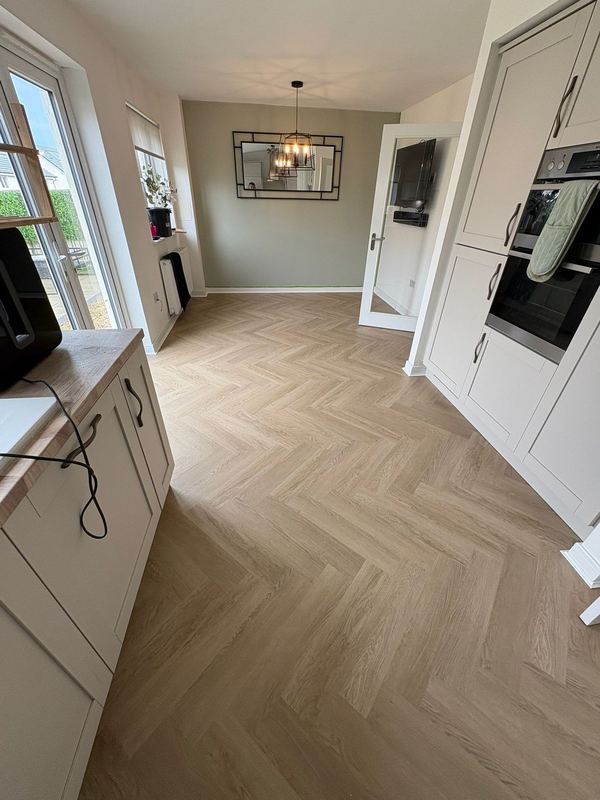
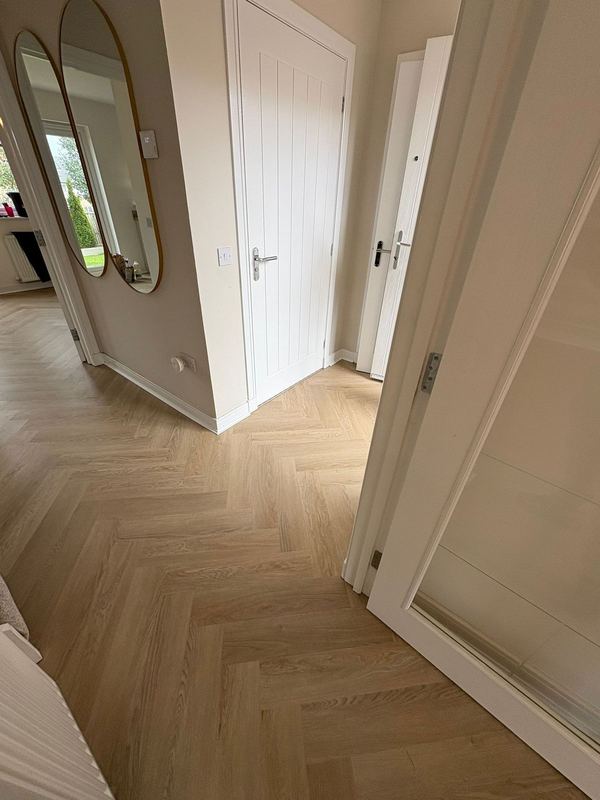
In pictures: our hazelnut oak, installed
These photos were taken in a customer’s home after our hazelnut oak vinyl herringbone was laid throughout the house.
A and B planks: how do they work?
Herringbone uses two kinds of planks that click in opposite directions: A planks (right) and B planks (left). Every box contains the same number of each, so you do not need to order them separately. The marking is printed on the back of each plank, in the groove: R for right, L for left.
How many boxes should you order?
One box holds 24 planks, or 1.8 m². For herringbone, allow 10 to 15% extra for cuts, a little more than for a straight lay, and more if the room has lots of corners.
Example: for a 20 m² room, count 20 × 1.15 = 23 m², so 23 ÷ 1.8 = 12.8, which means 13 boxes. Keep one box after installation: it will come in handy if you ever need to replace a plank. Our guide how many m² to order explains the calculation.
Installation, step by step
Herringbone takes a little more preparation than a straight lay, but a handy DIYer can do it. Here are the main steps; all the diagrams are in the installation guide.
- Prepare the subfloor: it must be clean, dry, stable and level (no more than 5 mm deviation over 3 m). Remove any carpet, lino or floating floor. Over tiles, the joints must be no wider than 5 mm and no deeper than 4 mm.
- Let the boxes acclimatise: if they have been exposed to cold or heat, leave them flat in the room for at least 12 hours, between 20 and 25 °C.
- Mark the installation line: measure the centre of the room and draw a straight line that will guide the whole floor.
- Prepare the starting triangles: assemble A and B planks into triangles 848 mm wide, then saw them along the line shown in the diagram. How many you need depends on the length of the starting wall, minus two 8 mm expansion gaps.
- Lay the floor, alternating A and B planks: with the triangles against the starting wall, click the planks in row by row along the installation line, and close the short-side click with a tapping block and a rubber mallet.
- Finish: use the offcuts from the triangles for the last rows, remove the spacers and fit the skirting boards and finishing profiles.
Useful tools: spacers, tapping block, rubber mallet, square, tape measure, pencil, utility knife or jigsaw and a pull bar.
Which rooms?
Vinyl herringbone is for indoor use in every living space: living room, dining room, bedroom, hallway, kitchen and bathroom. It is suitable for underfloor heating, with a maximum surface temperature of 28 °C. It is not suitable for showers and areas with a floor drain, garages, saunas, around swimming pools or in unheated rooms where the temperature drops below 10 °C.
Which shade?
- Natural oak: a light, bright oak that is easy to match.
- Honeyed oak: warm golden tones.
- Hazelnut oak: a soft, warm oak, the one in the photos above.
- Caramel oak: a richer oak that adds character.
- Ash grey oak: a soft grey for a contemporary interior.
All shades are on our vinyl herringbone flooring page, delivered to your home or building site.