Vinyl flooring in a bathroom: what you need to know
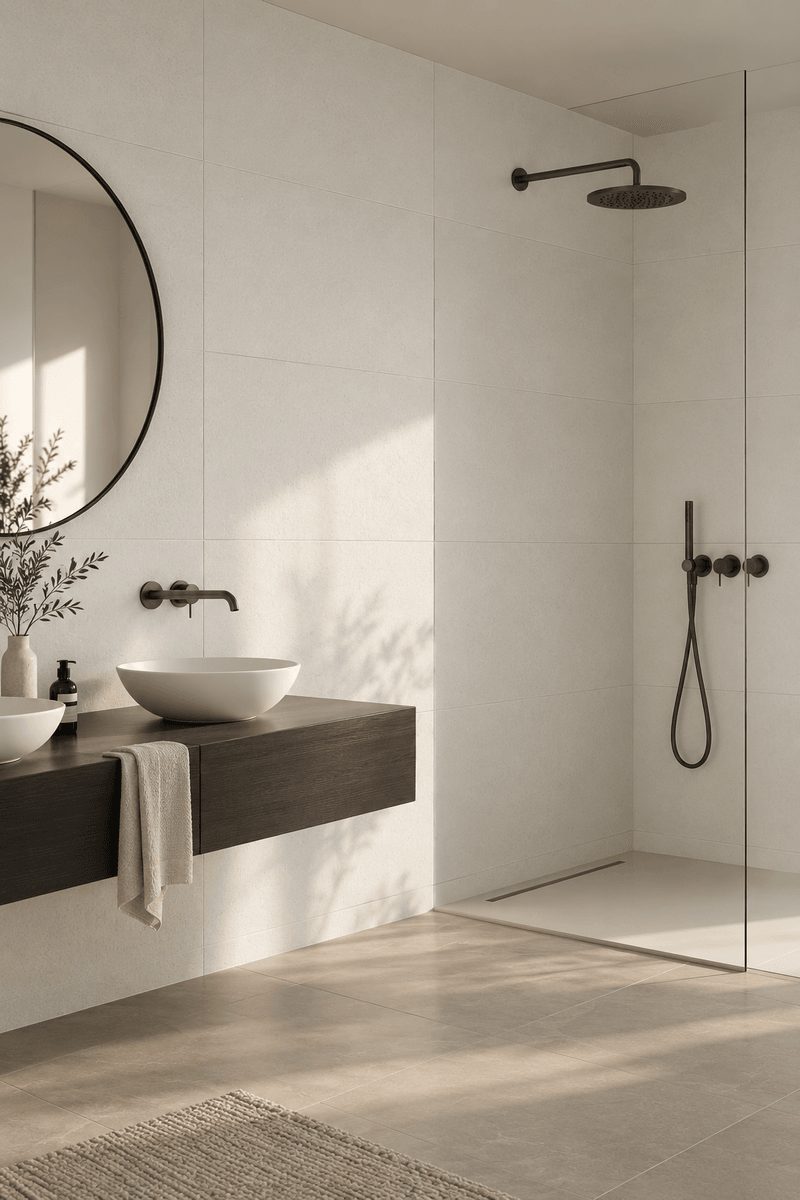
Rigid vinyl is one of the best choices for a bathroom, as long as you follow a few simple rules.
Rigid vinyl is water-resistant
A click vinyl floor with an SPC core does not swell with water: a puddle or splashes will not damage it. Note, however, that the floor is not a vapour barrier on its own. In a bathroom or on a subfloor that is not waterproof, lay a vapour barrier first.
Where to lay it, where not
- Yes: bathroom, shower room, toilet, utility room, kitchen.
- No: in a shower or an area with a floor drain, in permanently wet areas, in a sauna or around a swimming pool, or in an unheated room where the temperature drops below 10 °C.
Preparing the subfloor
The subfloor must be hard, dry, clean and level. You can lay vinyl over existing tiles, provided the joints are no wider than 5 mm and no deeper than 4 mm; otherwise, level the floor first. Install fixed furniture (vanity unit, cupboards) before laying the floor: a floating floor must be able to move freely.
What about underfloor heating?
Our vinyl floors are suitable for underfloor heating with a maximum surface temperature of 28 °C. Follow the heating-up steps in the installation guide.
For the walls: SPC wall panels
Our stone-look SPC wall panels cover a splashback, utility room or bathroom, and can go over existing tiles. In wet zones (shower, around a bath) the substrate must be fully waterproof, for example existing tiles or a waterproof backer board, following local building rules.
Everyday care
- Vacuum or sweep, then use a well-wrung mop with a mild, pH-neutral vinyl floor cleaner.
- Avoid rugs and mats with a rubber backing: prolonged contact with rubber can stain vinyl permanently.
- No abrasive products, and nothing oil- or wax-based.
All tips are in our maintenance guide.